Since the discovery of the extraction method of cannabis resin by means of solvents (BHO) at the turn of the millennium and the discovery of another extraction method by means of temperature, time, and pressure (Rosin/ SHO) around 2015, numerous different cannabis concentrates exist. Individual products differ not only in the way they are extracted but also in consistency, structure, retention of volatile substances, or proportion of undesirable plant parts such as chlorophyll or lipids, regardless of the specific method. Because the extraction artist has an influence on all these parameters. It is not easy to distinguish between the different consistencies and types of cannabis concentrates due to this huge variety. That's why we're going to explain the differences between BHO and raisin and which consistencies you can find when you buy concentrates or make them yourself.
BHO
BHO literally stands for Butane Hash Oil. Contrary to this term, which was influenced by initial ignorance, it is not oil, but the resin of the cannabis plant. In the vernacular, however, the term "hash oil" has become accepted as a synonym for cannabis concentrates. The term probably dates back to the times of the first big cannabis concentrate, distributed by "cannabis oil pioneer Rick Simpson". He is considered the inventor of the infamous Rick Simpson Oil (RSO). This concentrate, which is comparatively inferior due to high terpene losses and is produced with alcohol and a rice cooker, does indeed have a very oily consistency - but RSO is also a resinous extract. - But back to BHO.
One can dissolve the valuable cannabis resin from flowers or cuttings with quite different solvents.
Butane gas is valued for its good terpene retention properties but also requires a carefully executed extraction process. Other common solvents include Dexso, which, like butane gas, is used by many BHO artists worldwide. It has the advantage of being less reactive, reducing the risk of explosion in case of sparks. Supercritical CO2 is also used for extraction. The advantage here is that the gas disappears immediately during the extraction process and does not have to be degassed first by using a vacuum chamber, as is the case with BHO. But CO2 extraction also has its individual disadvantages, the first of which is the comparatively high loss of terpene.
But no matter which specific solvent is finally chosen: The basis for the solvent-based extraction process is always a glass or metal cylinder in which a certain amount of blossom or cut material from the cannabis plant is tightly packed. This cylinder has an opening at the top and bottom - the gas enters at the top, finds its way through the plant material, dissolves active substances such as cannabinoids and terpenes, and leaves the cylinder together with these substances through the second opening at the opposite end. The active ingredient-gas mixture is then collected by means of PTFE foils (Teflon, anti-adhesive). Except in the case of CO2 extraction, it takes some time for the solvent to evaporate completely from the concentrate before it can be collected and consumed.
Live Resin
Live resin is a very common subspecies of BHO. This is made from fresh plant parts directly after harvesting. Live Resin alludes to the still "living" plants - in fact, Live Resin tastes very fresh, and flowery and is very rich in terpenes. Since there is no drying time before the extraction process, Live Resin also turns out to be very economical. In the United States, Live Resin is one of the best-selling cannabis concentrates ever.
Live Resin, by the way, is not to be confused with Rosin, both products are fundamentally different. But read for yourself:
SHO - Rosin
Since around 2015, an alternative extraction method has been spreading all over the world: solvent-free extraction using pressure, temperature, and time. The new method came at exactly the right time, because already in 2014, two years after legalisation in Colorado, media reports about fatal accidents as a result of BHO extractions gone wrong were accumulating.
The Rosin pioneers started with a straightening iron, a piece of baking or parchment paper and a small bud - heat came from the straightening iron, pressure from body weight and time cleared itself. The explorers got shiny golden resin dabs as a result, which were rich in terpene and could be dabbed well. Unfortunately, the yield was not very high, so a new solution was needed.
A few companies have developed professional heat presses, especially for this purpose, which can apply several times higher pressures than the well-known straightening iron. In addition, such a press can press significantly more material at once and the pressure can be applied for a significantly longer time. The results of different pressings can differ greatly, but depend mainly on the starting material and secondarily on the parameters used. It must also be said that not all varieties are suitable for pressing.
Consistencies
Cannabis concentrates can have different consistencies, largely independent of the underlying extraction method. We present you a selection:
Shatter
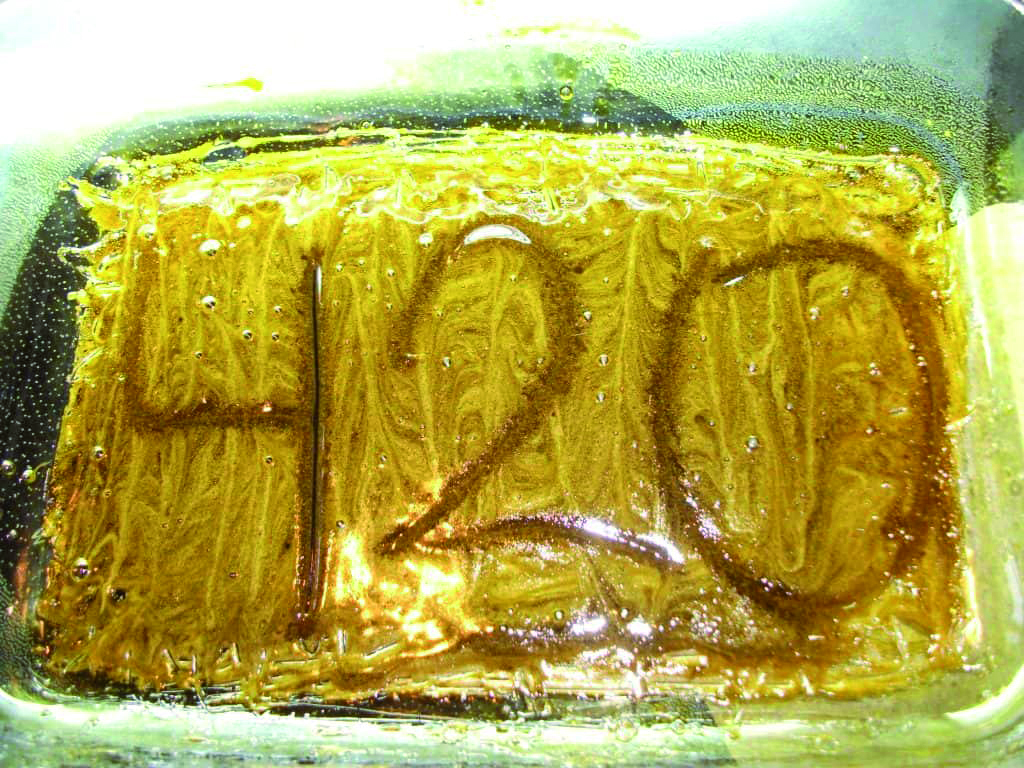
Shatter is a consistency that is primarily achieved by BHO extraction. Some time ago, shatter was considered the beauty ideal for cannabis concentrates. It is characterised by a hard, brittle, and shiny surface and often carries small bubbles from the vacuum chamber. Shatter appears particularly attractive when it has a golden-yellow colouring.
But appearances are disappointing: the dry appearance of shatter speaks for a lack of terpenes. Some terpenes are themselves solvents - a hardened concentrate cannot possibly contain them. It still looks nice, of course. Shatter can be produced by long purgene, i.e. by degassing in a vacuum chamber under slight heat.
Budder
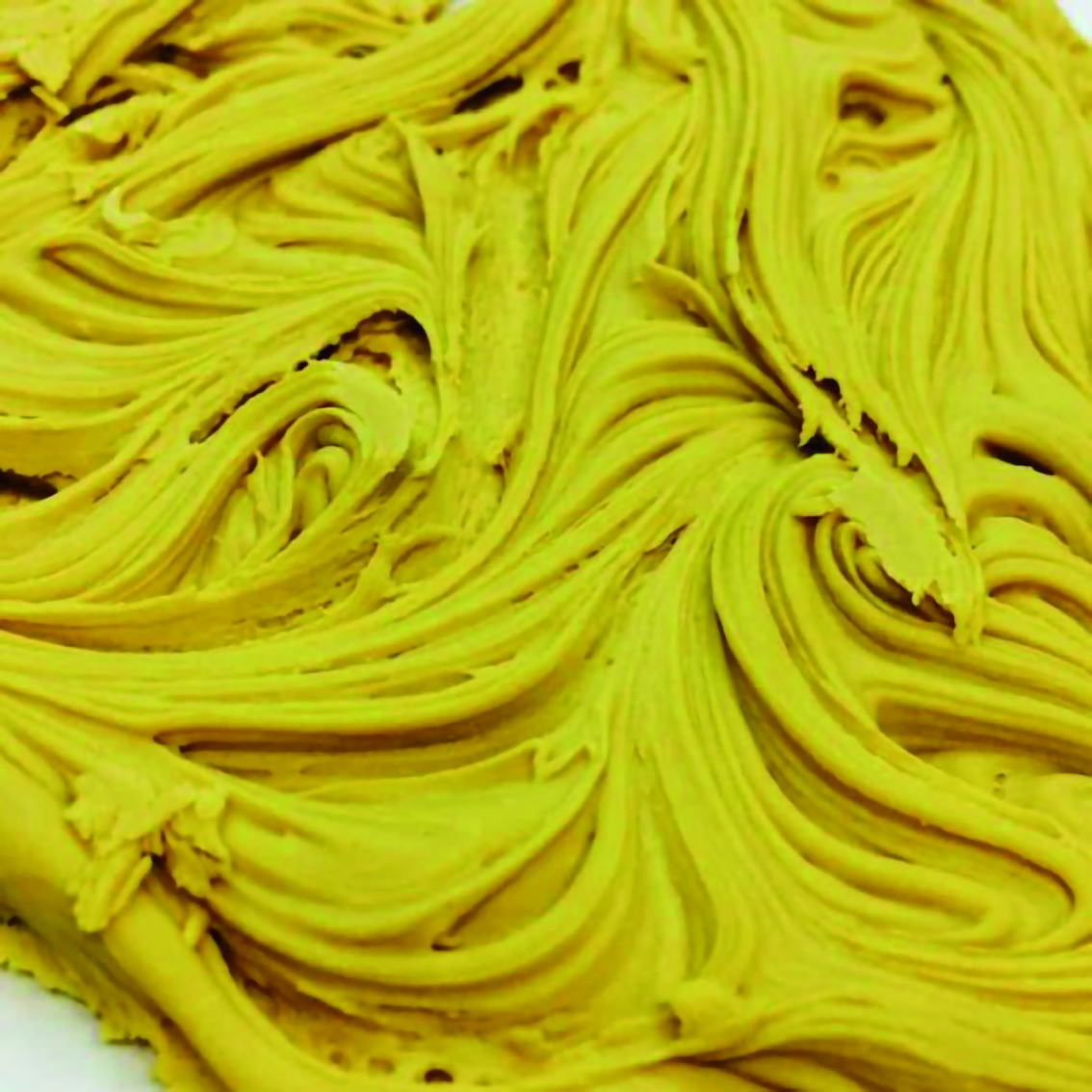
Extracts with a "buttery" consistency are usually very creamy, interspersed with a coarse-crystalline structure. Budder is strongly reminiscent of icing, but the actual appearance varies depending on the product between tending to be liquid or rather crumbly. Budder can be made with trim, flower or fresh material.
Terp Sap / Willow / Holy Water
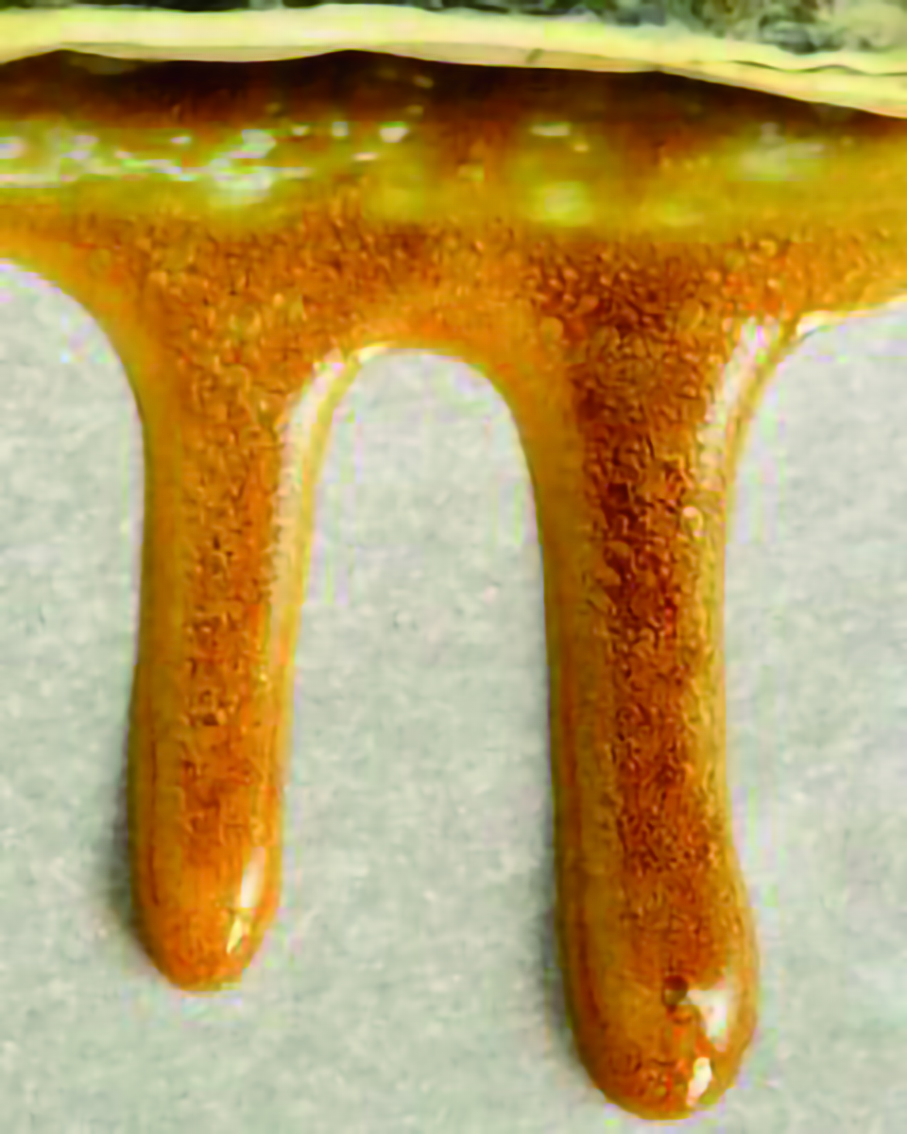
This is a consistency for relatively fluid concentrates, which speak for high terpene contents. Up to 20% terpenes can be contained in such a fluid concentrate, which is an enormous amount! Indicator for the high terpene content is the liquid consistency for the reason already mentioned above that many terpenes themselves act as (natural) solvents and accordingly provide a moist consistency.
Crumble
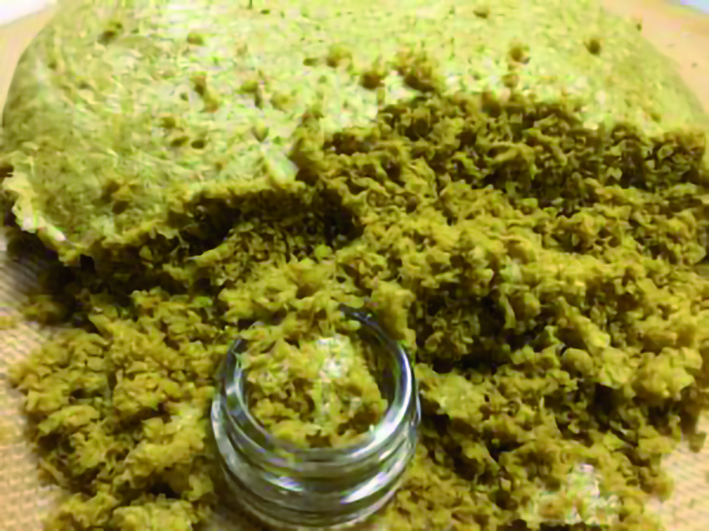
Another consistency for cannabis concentrates is crumble. It is one of the driest forms of concentrate and is notable for its coarse porosity. It appears like a pumice stone in many cases, but otherwise shares many disadvantages with shatter. Crumble is also made in almost the same way - but unlike shatter, the temperatures in the vacuum chamber are raised even higher.
Diamonds and Sauce
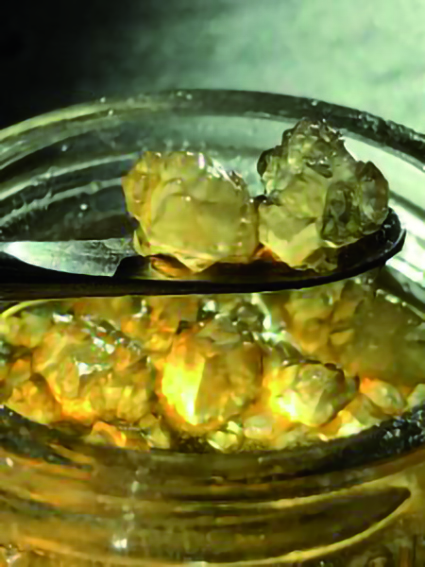
In addition to cannabinoid-terpene mixtures, pure THC crystals also exist with Diamonds. These crystals consist to a very large extent of THC and are usually prepared in a terpene sauce. The sauce contains a lot of aroma-giving and effect-stimulating terpenes. The crystals can be enjoyed as the first course and the terpenes as the second. It should be noted that THC extracts are still illegal in Spain and we do not want to encourage anyone to consume THC!
 English
  Spanish
  Italian
  German